Showing posts with label Yoga of Parenting. Show all posts

Monday, November 14, 2011

The Healthiest Baby (and planet) You Can Grow

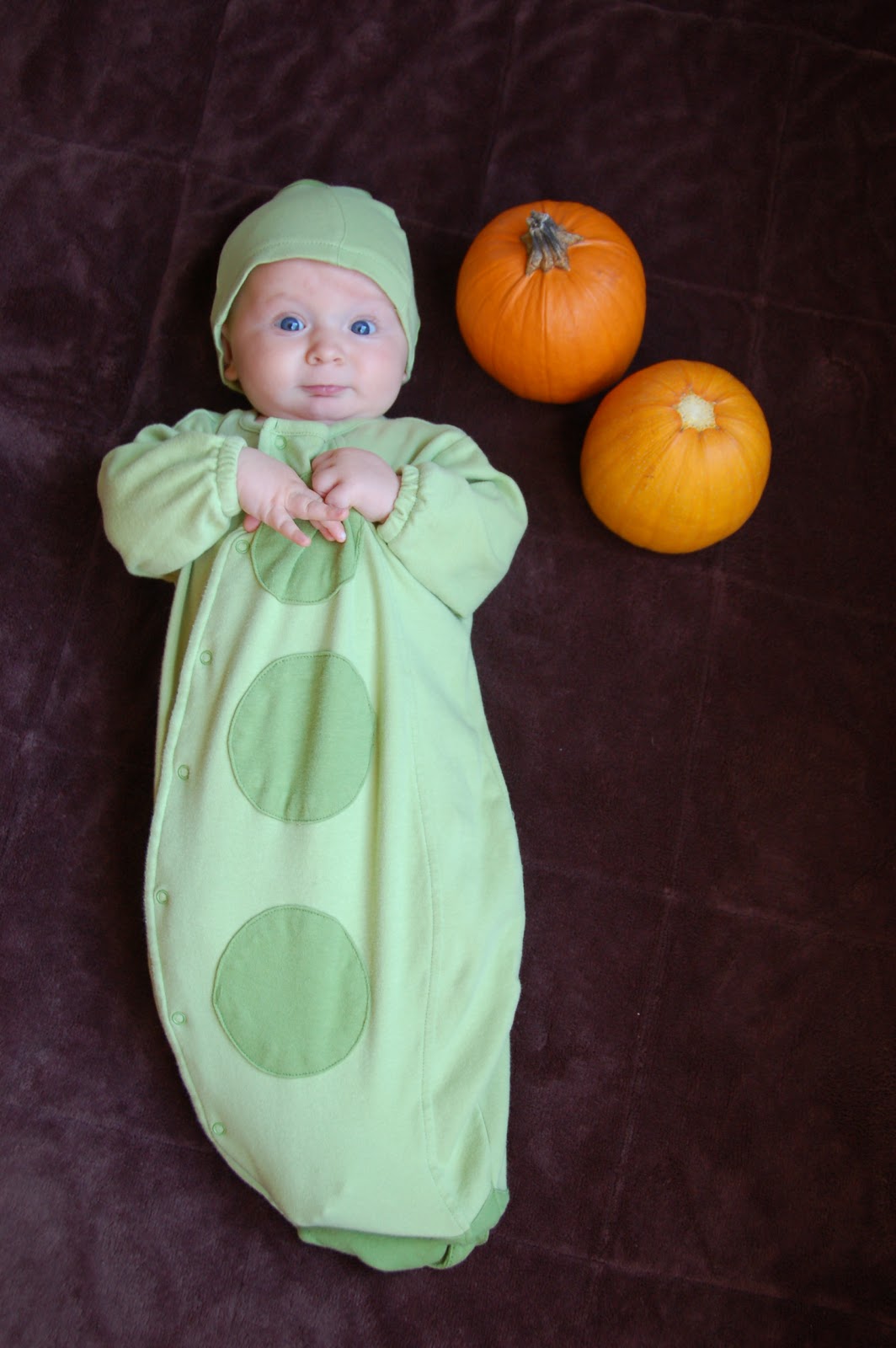
The newest addition,
our littlest (organic)
pea in a pod.
October 31, 2011
Many of my friends are expecting now, just after my giving birth this past June.  I love babies and motherhood, it's no secret (since I have 3 boys now).  So I take shopping for baby items seriously - whether for myself or for my mom-to-be girlfriends.

Today's post is actually part of a gift I gave a girlfriend of mine just a few weeks ago. She is expecting her first in less than 6 weeks - so exciting! - and I noticed a few items on her baby registry that could be lurking with some toxic chemicals (aka something akin to Johnson and Johnson since they have come under fire for using toxic chemicals in their baby bath products).

We all know and have heard plenty, sometimes more than we want, about why going green is necessary. The risks of not (going green) include everything from cancer, ADHD, and hormonal imbalances in yourself or your baby, to global warming and ultimately - polluting the future planet our children will inherit.

Going green is not really an option anymore, it should be an urgent imperative for every family.  Like so many of my friends, myself included, going green means starting small and taking baby steps (no pun intended).

So, here is my letter to her, of course edited for your best interest and consumption.

My dear friend,

I hope you absorb all of this magical time you can. There is nothing as joyful as the first pregnancy. Nothing.


Here is some information to go along with your gift. When I was pregnant with Michael, I poured through the research on clean foods and baby products. I found more than I wanted to know - about petroleum based chemicals in baby wipes, and even shampoo and food! I also learned that children's vitamins had saccharin, artificial flavoring and other dangerous and unnecessary chemicals in them. Read more

The solution is clean food and green baby products - no funny stuff or chemicals in them. So I searched until I found vitamins, baby wipes, diapers, bottles, and baby feeding supplies that were made with respect for the planet and with care for the fragile nature of tiny developing humans. ;)


I wanted to share a bit of this info. with you - since things as benign as baby wipes can be toxic - once you read the label and realize what the company has put into them. So - here goes!

Save money and the planet at the same time.  These actions can include:
  • Stop buying paper products (except toilet paper of course).  Okay, so occasionally I buy tissues (aka Kleenex) when there are snotty noses in the house. But other than that, we buy nothing disposable - no paper towels, paper plates, throw away cups or cleaning products, etc. Things like that. Also, we cloth diaper. It's a controversial topic, but from everything I read (and I've been following the cloth/disposable controversy since 2005) - unless you have a water shortage, cloth is better.
  • Avoid GMO's and other harmful substances. Rodale press (green press) really is a fantastic hot spot for the latest information on all things organic and green parenting. Here is this morning's fantastic review on: 7 things to evict from your baby's diaper bag.
  • Do not buy, I repeat, do not buy anything with these Toxic Ten in them. It's not easy, but there's nothing more to it than reading labels. Carefully.  Currently, until laws change, label reading is the only defense (or offense) we as consumers have to protect our families from dangerous chemicals.  
Here are a few more links:
  • Hidden dangers in baby wipes, bottles, and more...How to choose healthiest versions for baby.
    I used cloth diapers(Fuzzi Bunz) and made my own (easy!) cloth wipes and solution.  But this article gives alternatives for moms who choose not to or cannot cloth diaper or make their own wipes.
  • Excellent resource for latest information in green (and safer) living: http://rodalepress.com/.  You can sign up for their free newsletter, which outlines the latest research and findings for healthy living, food, environment, and fitness. Most important, they are usually the first (independent and not for profit agency at that) to report on dangerous chemicals found in baby toys, foods, etc. Their mantra is "Where Health meets Green."
  • The New Good Life: http://www.johnrobbins.info/the-new-good-life/.  A book about eco-friendly and safer (better) living for everyone on the planet. 

    Through searching on the web over the last 6 years, I have found a sustainable substitute for just about every baby product a parent will need during the first 5 years.  I have found many other resources on healthy versions of things pediatricians regularly recommend.

    For example, if you breast feed, your MD is likely to recommend Vitamin D drops. Well, I recently went to the drugstore to find the D drops that were recommended to me by a pediatrician. The drops that are front and center on drugstore shelves are full of preservatives and artificial flavorings. I could not imagine giving my baby such a toxic brew when he's fresh, new, and has a real start at a healthy life.   So - I did some homework and found a substitute Vitamin D for the preservative-riddled vitamin D on drugstore shelves. It is (simply) vitamin D3 and coconut oil (what a relief).  Of course, it is up to moms (and dads) to read labels and discern what is best for their child.  The other option for parents are to forgo the supplements, such as the Vitamin D drops. However this argument is a drop in the well of many controversies on raising baby.

    Anyhow - not to overwhelm you - but as you know, you are your biggest advocate for yours and your baby's best health. The western system of medicine can sometimes be guilty of practicing medicine based on patient (or practitioner) convenience rather than what is best or evidence based - and this short sighted model is typically and overwhelmingly not planet or people friendly (or sustainable in the long run).

    I do hope this helps and encourages you. It's truly my passion to help moms and babies have their best, most natural, most gentle start!


Wednesday, March 9, 2011

Parenting: Do You Fit In?

This past week as I was getting my usual daily allowance of news (online) and doing a little light research for work I ran across this article on parenting in the "Healthland" section of Time Magazine.  From reading its title - "Does Having Kids Make Parents Delusional?" - I (mistakenly) thought it was an article based on solid science of finding work and life balance in parenting.  But boy-oh-boy - was I ever wrong.

The "Healthland" section of Time features the subheading description, "A Healthy Balance of the Mind, Body, and Spirit."  Yet at one point the the writer, a senior columnist at Time magazine, compares the futility of raising children to "the same reason you keep spending money to fix up an old car when it just doesn't work — or keep investing in the same company when it's failing. Humans throw good money after bad all the time." Read more: http://healthland.time.com/2011/03/04/why-having-kids-is-foolish/#ixzz1G1P1Aj6c

I am willing to bet many other people feel the same way I do when I say - the author has clearly forgotten that he is, in fact, someone's child. The child of a couple who made sacrifices, out of love, to raise him. The child of a couple who probably realized that life is not just about a series of easy successes, won without hard work, blood, sweat, and tears. The child of a couple who at some point realized that life is not just about chasing your own selfish desires.

But the author goes on write, "Our national fantasy about the joys of parenting permeates the culture...Does this mean you shouldn't have kids? Yes — but you won't." Writing an article with derogatory overtones against families in America (not to mention that Time would even publish such a nonsensical article - being that Time would not even exist if it wasn't for the parents who conceived the idea, the business, and the people that work there) - reveals a sad and disheartening fact about America today...

If Americans think like this writer, then we are ironically in danger of becoming, if we are not already, a culture of snotty nosed, self-centered, intolerant brats.  
Fitting In?

Who would want to fit into a culture that tries to invalidate the miraculous and beautiful responsibility of raising up the future of our Nation? Hopefully no one, because if we did, we would eventually cease to exist.  Any remaining existence would be built upon self-centered action fueled completely by an individual's desire to succeed - without any regard for the well being of the greater good.  We would see a world where only self-ambition was counted as worthy or valuable.

Full Circle Attitude(s)

Parenting is worthwhile and necessary.  Cradled in the arms of mothers and fathers - across this country - you will find the future of this Nation.  President Obama, in his inaugural address, addressed parenting and the inherent value of American family directly - calling it a "public service." Here is the full quote: 
“As we consider the road that unfolds before us, we remember with humble gratitude those brave Americans who, at this very hour, patrol far-off deserts and distant mountains. They have something to tell us, just as the fallen heroes who lie in Arlington whisper through the ages. We honor them not only because they are guardians of our liberty, but because they embody the spirit of service; a willingness to find meaning in something greater than themselves. And yet, at this moment - a moment that will define a generation - it is precisely this spirit that must inhabit us all.”
“For as much as government can do and must do, it is ultimately the faith and determination of the American people upon which this nation relies. It is the kindness to take in a stranger when the levees break, the selflessness of workers who would rather cut their hours than see a friend lose their job which sees us through our darkest hours. It is the firefighter’s courage to storm a stairway filled with smoke, but also a parent’s willingness to nurture a child, that finally decides our fate.”
So do you fit in as a parent? as a mother? as a father? According to the science used in the article not only do you not fit into current culture, but you (as a parent) are so delusional that you overestimate the joys and rewards of parenting.

The author says that instead, you should be pursuing your own wants and desires and hire end of life care (its cheaper than having children) rather than becoming "suckered" into becoming a parent.

However I believe, just as I would guess most all parents do, that giving birth to and nurturing this fragile human life - is not only a worthwhile task - but is the most important job and privileged responsibility to which we will ever commit ourselves. Fitting in is not even a question - since through raising children we determine the future of America.

The Yoga of Parenting

Rising above the  need to "fit in" is a timely lesson we can all learn in the Yoga of Parenting (which also applies to this nice young senior writer at Time, who probably is not a parent).
  • Act deliberately for positive change. There is no time to waste, it is later than it seems. Parents can say with confidence, "I'm working for positive change in this world. What are you doing?"  Or to borrow from the screenplay in the movie, The Departed, "I'm the guy doing my job...you must be the other guy."  There is no time to fruitlessly contribute to any movement which does not seek positive change or that tears down the inherent value and worth in others.
  • Everyone has worth.  Building up the parents of this nation - will build up the children of this nation - which will ultimately strengthen us all. 
  • Surround yourself with supportive people.  Be encouraged by other parents who genuinely feel positive about parenting and take their responsibility seriously. Nurturing the next responsible generation cannot be invalidated by a single person, organization, or even a wayward nation. 
  • Practice what we preach. Our actions speak louder than words - and our children are watching.  Practice meditation, self-reflection, prayer, deep breathing, and/or what grounds you as a parent - to keep your focus on what is most important. Otherwise, we can get sidetracked with what the world says is valuable - career status, financial wealth, the size of our home(s), the make/model of our car, or where we vacation.
  • Stay positive. Parents, be encouraged in your dedication to your children.  You are appreciated by those who do know that children are our most valuable resource, as well as the delight of our heart.  
  • Have an attitude of gratitude. Thank all the parents you know who you see day in and day out - doing their best and making sacrifices so that the world can be a better place for everyone. Thank them for being wise enough to recognize that their children determine our collective future.

A comment from one parent..."I raise my children for my children and for the future of the world, not for me.  I enjoy the benefits of parenthood that the author speaks about as an illusion...if in fact most of the world does think like this author, then we are on our way out as citizens of this planet." What do you think?


*photo taken on my sons' first family outing to Washington D.C. July 2010

Tuesday, December 21, 2010

Cultivating Compassion in Children


This week's guest blog is by author and activist for children and gentle parenting, Licia Rando. This post is Part Two in a series on Compassionate Parenting.  


We all want a more compassionate world, but how do we help to make it that way? Guiding the next generation in compassion ensures a better future for us all. Here are some ways to begin cultivating compassion in the children under your care.

Be loving and compassionate with your children. 

Darcia Narvaez, a professor of psychology at the University of Notre Dame, studies empathy and moral development.  She tells us that children need to be held and to have their needs met to develop the neural responses necessary to feel for others. “Part of what is being shaped by caregiver touch and responsivity is the neuroendocrine system, which plays a large role in managing stressful situations and bonding to others throughout life.”
Bruce Perry, child trauma expert and psychiatrist tells us, “Babies are born with two important skills that prepare them for empathy --the ability to imitate facial gestures and the automatic response in which the cries of other infants cause them to cry as well.” Both of these actions involve mirror neurons.  These cells fire when we perform an activity and they fire when we see someone else perform an activity, but less intensely. Someone else’s smile or tears triggers a response in our brains.  This response enables us to feel another’s pain or joy.

Help your child learn to read emotions on faces.

Make happy, sad and mad faces at your baby and name them for her.  Show her picture books that focus on simple feelings. At 1-2 years, when your baby is frowning say, “You look sad”. This helps her to know her inner world which is necessary to feeling what someone else feels. As your child reaches 2-3 years, ask her to make faces for the emotions you name, extend the feelings to include surprised, excited, hurt, and scared. While reading together, look at the illustrations and identify the feelings of the characters.  As the stories get more complex, ask what the character feels and why she or he might feel that way. Also ask if your child remembers feeling this way. Extend this to your day to day living. When you see a child at the park get hit, ask your child what he thinks that child is feeling.  Ask what you might do to make the child feel better.

Help your child act compassionately.

Your compassionate acts will have the most influence on your child learning to act with compassion. Also help your child to perform his own compassionate acts. Ask him to draw a picture or give a gift of something he knows someone else would like and give it.
Keep in mind that children under 18 months are unable to determine a different desire than their own. A study by Repacholi and Gotnick gave children bowls containing either broccoli or goldfish.  The children preferred the goldfish. Researchers made faces expressing disgust with goldfish and a like of broccoli.  When the researchers asked for more of the food they liked, the children instead gave them the food they themselves enjoyed (broccoli or goldfish) until the children were 18 months of age. Children not only need to identify feelings to develop compassion, they need to see that others may have different viewpoints than they themselves have. 

Help your children be mindful of good acts at every age. 

In my grade 2-3 religious education class, children recorded their good acts in a small notebook. Then in class each child placed a gem in a jar for each good act they performed and each act they witnessed someone else perform. Giving gems for seeing someone else perform a good act serves as a model for the child, someone to imitate. When the jar was full of jewels, we had a party to celebrate. This was one of their favorite activities.  I also told them to observe the receiver of the kind act’s facial and bodily response, to see how their kind acts affect others. This would serve as an immediate reward.

Encourage schools, clubs and places of worship to provide opportunities.

Help make dinner at a shelter, collect canned goods, clothes, baby items, etc. Older children will find projects more meaningful if they have input into which organizations to help. Our older Girl Scouts voted to help the animal rescue league and to collect books for flooded libraries.
When we parent to cultivate compassion in our children, we produce beings who are able to feel what others feel and to act on their behalf. If all over the world parents united in this cause, we could assure a more compassionate world - a legacy for all our children.

Licia Rando is the author of the picture book The Warmest Place of All and Caring and Connected Parenting: A Guide to Raising Connected Children.
The guide is endorsed by pediatricians T. Berry Brazelton, MD and Laura Jana, MD. Daniel Siegel, PhD, author of Mindsight and co-author of  Parenting from the Inside OutEisler, author of The Real Wealth of Nations. The guide is available free on-line at www.liciarando.com or www.saiv.net


Sources

1.   D. P. F. Montague  & Walker-Andrews, A. S. Mothers, Fathers, and Infants: The Role of Familiarity and Parental Involvement in Infants’ Perception of Emotion Expressions. Child Development, 73, No. 5, 1339-1352. 2002.
3.   Bruce Perry, M.D.,Ph.D.and Maia Szalavitz,  Born for Love: Why Empathy is Essential—and Endangered, William Morrow, 2010.  page 21.
4.   Repacholi, B., and Gotnick, A. Early Reasoning about Desires: Evidence from 14- and 18-month-olds. Developmental Psychology, 33, 12-21. 1997.

*photo is of Ginger and her second son in 2008.

Friday, October 29, 2010

The Yoga of Compassionate Parenting


I am learning that parenting gets more difficult, in different ways, as my children grow and develop.  Whereas in the early years I was sleep deprived and physically exhausted, now that they are growing beyond toddler"dom" - I have regained my former energy and zip (well, maybe not all of it, but pretty close to all of it).

However, while I don't have to exert as much physical effort - the emotional and intellectual requirements are stiffly increasing.

It won't be long before a simple kiss and hug won't fix their boo-boo's.  I already have to think more, communicate better - and in short, I am having to learn how to be a master negotiator.  Pulitzer Prize nominee Ann Crittenden writes of this in her book, If You've Raised Kids, You Can Manage Anything, which asserts that more women should be managerial executives - as a result of, not in spite of, their experience in child rearing.

Parenting, I am learning, is not a dictatorship.  Sure, I can run one of those for a time, but after a while - ordering them around not only won't work, but it will, I believe, backfire.  It may create forced good behavior for a time, but it will not build a mutually respectful and meaningful relationship with my children. And that's exactly the type I want - a parent/child relationship with deep, loving roots.

One of my spiritual mentors told me once that he and his wife set a goal in raising their children, and he encouraged all parents to do the same.  Their goal as parents was to "raise their children so that they would want to come back and visit them one day."  Although on the surface it sounds trite - it really is a genius mission statement for parenting.

I never forgot his words. When my children were born, my husband and I adopted the same mission statement. If it was good enough for my spiritual mentor, I reasoned it was good enough for us.

Getting back to parenting. I am struggling.  I have to admit that, and if you asked any parent and they were honest, they would admit the same.  We all struggle as parents. I am not sure how to handle or how I will handle my childrens' increasingly complex (and very different) personalities. I don't want to make a mistake and leave emotional scars - so sometimes I am paralyzed with fear - not sure whether or not I am making the right decision(s) as a parent.

Since my children were born I have been steadily buying and reading books on parenting.  It started with books on the anthropology of parenting, which really got me thinking about how the American way was NOT the only way and by far not the BEST way (in many cases). 

After educating myself about anthropology, and with my background in neuroscience and pediatric physiological development, I realized I wanted a more compassionate approach to parenting, which led me to some of the books and resources you'll find below.  But first, let me introduce a wonderful new person I have recently met, albeit virtually, online.  She is an advocate, not just about compassionate parenting, but for compassionate thinking and world peace. 


Her name is Dr. Riane Eisler.  She is a longtime women's advocate and is co-founder of the Center for Partnership Studies and SAIV.   The organizations are dedicated to "building a culture of gender and racial equity, economic justice, and sustainable environment," and stopping violence, respectively.

A few weeks ago I sat down with Dr. Eisler during a webinar on Caring Economics.  The webinar was very informative and has underscored my own mission as a women's activist. Afterwards, I began to study Dr. Eisler's sites and learned more about her work.  I realized that my passion for being a better parent had a lot to do with Dr. Eisler's work. 

As a parent, If I discuss parenting in "yogic" (which has nothing to do with religion) terms - I would describe my desires for parenting like this:

I want my children to grow up in a safe environment without fear of violence or discrimination - and with well balanced physical, emotional, intellectual, and spiritual health.  In other words, I want to parent non-violently and compassionately within a koshic model. 

And so - in simple terms - using that model means that I teach them, on a daily basis, that with our two hands - we can accomplish great things - like taking care of the planet, helping others, and helping ourselves.  Dr. Eisler's is working to carry that message across the globe, and it has been recognized and endorsed by many people.

It is in researching Dr. Eisler's sites that I came across a parenting guide she has endorsed.  The Caring and Connected Parenting Guide, which has also been endorsed by renowned pediatrician Dr. T. Berry Brazelton, Nobel Peace Prize Laureates Desmond Tutu and Betty Williams, pediatrician Laura Jana, psychiatrist and author Daniel Siegel.

I hope you will enjoy reading and using the guide as much as I have. Download the free Caring and Connected Parenting Guide

Other Resources:

Building Cultures of Peace
Investing in our Human Infrastructure

Dr. Brazelton's book, Touchpoints
Birth to 3
3-6

Dr. Siegel's book, Parenting from the Inside Out

Dr. Jana's books

Dr. Sear's and Martha Sear's Book on Early Parenting (This book challenges the typically accepted American status quo on early parenting. I loved it, and so did my kids.):
Attachment Parenting

Green Mothering and Parenting
Natural Family Living, by Mothering Magazine's Peggy O'Mara

*Photo was taken of me and my oldest son, who loves to give me flowers on an (almost) daily basis.

Saturday, September 11, 2010

The Mommy Wars

I recently had a question from a reader, a mother of 2 young girls. The problem she presented has been plaguing women since they left the home en masse and entered the workplace - from the 1970's forward.  It is a problem we all struggle with - whether we are stay at home moms or working moms.

Here is my response to this busy, working mom - who like all mothers is just trying to do the best she can for her children.

Question:

Has anyone else had this problem? I work 2-3 days a week as a nurse in an extremely busy hospital Endoscopy department. I have 3 and 8 yr old daughters. I have a really busy life. I'm experiencing a sort of "backlash" from my friends. My work friends are giving me this "must be nice, only working 2 days a week." My at home mom friends are giving me this "your too busy for us, your career and all."

It is soo frustrating. It's like I can't win. Neither party has any idea what my home life is like and all I am responsible for. I'm really doing the best I can. Any suggestions??

Thanks,
XXX

My Reply:

Ask yourself this question first: Do you really like those friends who are giving you such a hard time?

In fact, are they really your friends at all? If it were me, I would not give them a second thought. Women have it hard enough in this world trying to balance being the (usual) primary caregiver, the (usual) primary household manager, and then oftentimes working outside the home on top of that. However, instead of helping each other - they frequently tear each over down over mothering choices.

This evolution is very sad, and it represents the demise of women's relationships in this world. Women used to band together and help each other stand strong - through birth, child rearing, family life, work, and death. I believe we lost this womanly community of support when women started to believe they had to choose sides - either work inside the home OR work outside the home. They also bought into the belief that one was more important than the other. The truth is - both jobs are valuable and absolutely necessary.

Surround yourself with positive thinkers who support you.  You are doing your best as a woman and mother and you only have time in your life for those will help raise you up - not tear you down.

If you have not read any of Pulitzer Prize nominee and mother's activist Ann Crittenden's books, I highly suggest them. Crittenden's books empower mothers- and leave no room for the petty backlash you are, and most ALL mothers experience, from their not so friendly "friends."

You are doing a great job - and yes, you can have the best of both worlds as a mother and woman. I think you have made a great decision - it's one I can relate to and strive for as a working mother with two young sons.

Congratulations to you, keep up the fantastic job of balancing your life well and having the awareness and wisdom to know when you may have to walk away from relationships which are damaging your well being.  Cut yourself loose from those false friends who do not support you. There are plenty of women out there who do support you, and I am one of them!

Blessings to your and your family,
Ginger

*photo taken of me speaking at a national health care convention in Philadelphia in June. What is not pictured is the internal struggle of me leaving my sons (again) to be "the working mom."  I empathize with all moms - stay at home and working moms.  Women need to support women because no one else can truly understand the complexity of what life requires from us.

Friday, August 20, 2010

Is Your Kid A Food Snob? (maybe she/he should be)

A few weeks ago I was researching preschools and childcare in the area.  During my search, I had a wonderful conversation with the director of a preschool about giving your child a (um) "golden palate."  In other words, how do we raise up our children to seek out and enjoy healthy, whole foods?

Here is the answer I gave the preschool director. I hope it helps you in your journey as a mother or woman who cares for, works with, or just loves children.

Hi Joan (not her real name),

I commend you for attempting to feed the children healthy food. However, it is tough to offer (and have them actually eat) healthy food if they aren't any at home.  

As a physical therapist and health coach, I am also a long time teacher. If I could make a suggestion for your lesson plans - you might consider including nutrition as part of what you teach the children. Teaching healthy choices as part of your lesson plan may actually turn out to be what helps a child most in life...we need to help prevent chronic disease and debility in our future generations.  Adults behavior easily imprints children at this age - and leading by example, which includes serving healthy meals and snacks - would go a long way toward ensuring the future health of our nation's children.

Epidemic Unhealthy Eating Is Creating Premature & Preventable Chronic Disease In America's Children 

Childhood obesity, diabetes, and inactivity is now considered epidemic in America's children today.  Our crops in America are laden with pesticides, genetically modified organisms, and harmful antibiotics and insecticides.  These chemicals have been found in the bloodstreams of our children and in pregnant women, not to mention in cancerous tumors of the breast. Now the USDA is even considering including "organic" food as part of the food pyramid, because of all the serious health risks associated with non-organic foods.

My Story

On a personal note, it was not until the late 90's that I realized how toxic my daily diet was.  I was consuming high fructose corn syrup, artificial flavorings, pesticides, and many unidentified artificial ingredients, now dubbed as "food technology," without even knowing it. Low-fat was all the rage, and I was a naive consumer of all those chemically laden, high sugar, high sodium products.  (And yes all of those poisons are in many, or I daresay most, conventional high sugar cereals and snacks.)

High fructose corn syrup is being linked to childhood obesity, diabetes, and attention deficit disorder, to name a few. Many of those foods also contain parabens and propylene glycol - the later of which is a cancer causing petroleum (yes, oil) derivative.  In addition, serving ware and storage containers made of plastic often contain BPA, a chemical known to alter hormonal function - especially in women, children, and pregnant women. read more on harmful effects of BPA

Raising Up A Food (and serving ware) Snob


It was through reading the following texts below, that I began to recalibrate my own palate. I eliminated all processed food - which meant basically anything that came in a box ready to eat. Today, if my children eat snacks or "treats," I make sure they have no high fructose corn syrup, artificial flavoring or preservatives.  In addition, when possible and where necessary, all of their food is organic.  I rid our home of dangerous plastic containers, and use food containers to pack snacks and lunches such as Lunch Bots and Klean Canteen.

I have studied western nutrition and holistic nutrition through Chinese medicine and Ayurveda (Indian medicine).  Now, I counsel all of my patients and students across the United States about the dangers of consuming a typical "American" diet.  Americans suffer from more chronic diseases, including heart disease, stroke, obesity and many cancers that are preventable with diet and exercise, than any other nation in the world. Our children do not need to inherit these diseases or our current nutritional (or lack thereof) habits.

Resource List

Below I have a list of resources you might want to send home to parents, in addition to teaching the children about nutrition. It can also be a way to reintroduce a new food program that is holistically balanced.  All of these changes can help parents create a clean (and discerning) palate for their children.  Once children are accustomed to eating whole foods, the taste of artificially flavored and high sugar foods will become unpalatable.  For example, my children used to eat sugar on their cereal (a well meaning family member started this trend).  So last fall I took cereal out of their diet altogether and made a cooked breakfast each morning.  This summer, when the weather lent itself more easily to cold cereal - I reintroduced the cereal (the organic version of Cheerios, of course).  I did not offer them any sugar.  The result? They have been happily eating non-sugared cereal all summer long, never once having asked for sugar.

Seasonal Eating

As summer now gives way to fall, I also recommend eliminating cereal from your children's diet in keeping with Ayurvedic and Chinese medicine recommendations. I rely on making "warm breakfasts," rather than cold.  I make whole grain (or gluten free for those with allergies) pancakes from scratch with maple syrup (grocery store syrup is one of the worst "food technology, high fructose corn syrup offenders. Just say no!), oatmeal, eggs, soy based breakfast foods, and the occasional meat. My children aren't vegetarian, but neither does our family rely on meat. I serve it only 1-2 times a week.  The rest of the week they eat vegetarian protein(s) and are thriving wonderfully. And as a side note - it does not take that much time to prepare a healthy, whole food meal.  Opening a box may seem convenient, but the health of our children is more important than convenience. In addition, I also get to teach my children about the joys of Slow Food and it is a wonderful way to create quality family time together (not to mention great memories and great food!).

Treats & Desserts

When I do bake desserts, we make organic versions. Cupcakes (yes, actually!), cobblers, pies, cakes - nothing is off menu for my children.  I don't even restrict them from eating candy - but I have educated them as to what is in it and what it does to their body (not to mention their teeth!).  I want them to be able to make  informed decision(s), rather than me playing the eternal (and not very effective) role of the rigid maternal nutritional food police.

The result?

I use my own family as an example.  My 4 year old declared he is eating no more candy or junk food - including his favorite - lollipops. (we'll see how long this lasts) However, to my surprise, he's kept this trend up all summer - and he shows no signs of dropping his new habit.

Instead of junk food, he eats fruit and the desserts that we make together; and, when offered what he labels "junk," which generally includes chips, snack foods, and all candy - he declines 99% of the time.  I can recall 2 instances where he accepted a lollipop - and both times he declared to everyone in the car (we were at the bank where the teller, the world's sartorial lollipop dispenser, always tailors the treats in favorite colors), "I am only eating 1 lollipop today, because they don't make me big or smart and I don't want holes in my teeth." Of course, I smiled inwardly and outwardly ~ a mother's greatest dream (or at least partly) - I have created a food snob, or at least a foodie who can discriminate between high quality and low quality (or no quality) food. 

He has learned about organic gardening, picking fresh fruit right out of the trees and off vines.  He has aso learned about cooking from scratch with whole foods.  As a result, he has a rather refined and sensitive palate for a 4 year old. (It took me almost 30 years before I started to develop one.) For example, before he could even speak he could taste the difference between jarred spaghetti sauce and our homemade organic version. (he wouldn't eat a second bite of the processed/jarred kind).

Expanded Resource List

I say all of this to encourage you, and to applaud you for your efforts to feed children healthy cereals and snacks.  I am going to bet that if you institute a new nutrition program as part of your lesson plans - about balanced nutrition and the importance of eating whole foods as close to their original source as possible (i.e. eating locally, seasonally, and organic)- you will help change a nation's nutritional habits, one child at a time.

Here are the resources I give to patients, which you can share with parents:

Fast Food Nation: The Dark Side of the American Meal - a well researched book about the underbelly of American fast food

Food Inc.: A Participant Guide: How Industrial Food is Making Us Sicker, Fatter, and Poorer-And What You Can Do About It


Food Rules: An Eater's Manual

In Defense of Food: An Eater's Manifesto

Disease Proof Your Child: Feeding Kids Right

Food You Should Always Buy Organic

Seven Reasons Why Kids Should Drink Organic Milk

The Green Guide - a guide to living healthy, responsibly, and preventing disease

Lastly, for those parents already organically saavy in the healthy eating department - the next level to improve health even more is consuming an Anti-Inflammatory diet, endorsed by physicians, nutritionists, and holistic nutritionists globally. You can find an example of The Anti-Inflammatory Diet here.

The list of resources is certainly not exhaustive, but it is a good start toward empowering parents to help their children live a long and healthy life.
I hope this helps you in your teaching and passion for children's education and  many blessings to you in the new school year.

*photo is of Michael baking his first organic apple cobbler with oatmeal topping, in a NC pottery crock gifted to him by his great grandmother. He insisted on wearing his bicycle helmet for the event.

Tuesday, April 27, 2010

Two (more) Ways Yoga Can Make You A Better Parent


A few weeks ago I was invited to write a guest blog about yoga and parenting. Read the full blog here.

Here is a continuation of my blog on yoga and parenting, with two (more) ways yoga can help us all be better parents:

Two More Ways that Yoga Makes You A Better Parent

1. Don’t underestimate the importance of your breathing habits.

I have seen many mothers whose previously calm demeanor and good breathing habits BC (Before Children) mysteriously vanished into thin air AC (After Children).

Why is this?

Today’s women have fought (hard) for their autonomy and independence. In addition, families are more mobile than ever. However, the deserving achievements of this modern movement (remember it hasn't even been 100 years since women could vote) has left women (and families) with a very flimsy infrastructure – which means we tend to have poor support systems. Most women, myself included, underestimate the importance of the statement “It Takes A Village to Raise A Child.”
Even someone like myself, who has a master’s degree from one of the top physical therapy schools in the United States and specializes in women’s health…was on the edge of sanity after going for weeks with little more than 2 hours of sleep a night with 2 children in diapers, a corporation to (still) run, and with no family in the area who could help.
The nugget of truth here is that women are busier than ever and oftentimes with less support than ever. When women enter or re-enter the workplace after childbirth, they keep 75% or more of household management duties, in addition to their new role as a mother. In addition, the American workplace has proven to be the one of the least "parent" friendly of all developed countries.
All of these stressors can easily lead to depression and poor parenting choices. Postpartum depression always lurks right around the corner – for all women – regardless of their socioeconomic status or education level.
However, good breathing habits have been proven to help battle depressive symptoms. Read my previous blog on improving mood, coping skills and preventing/managing depression with good breathing habits. Learning good breathing habits can ward off depression, improve quality of life, increase energy, and stabilize mood - which all leads to better parenting.

2. If you do not have a mediation practice, start today.


Meditation is called different things across the globe – Meditation, Devotion, Prayer, Quiet Time…the list goes on. However, anyone can practice meditation without conflicting with their spiritual roots. Read my previous blog on how Yoga must be recalibrated to fit the 21st century mother. This post will teach you how to practice a “savasana” (sha-vah-suhn) or corpse pose, which will help facilitate a meditation practice.

Tip: Create a Sacred Space.
I have friends from all different spiritual traditions - Hindu, Christian, Jewish, Muslim, Jain, & Buddhist. They all have one thing (well way more than that) in common – they all have a meditation practice that honors their spiritual belief system. I encourage you to create a Sacred Space to help you meditate. It may be as simple as a converted closet or elaborate as an entire room with an altar or table holding your inspirational quotes, Sacred texts, readings, poetry, figures, as well as everything you need to meditate (which could be as simple as a cushion on the floor or elaborate as a cushioned chair, bed, or other props to help you be comfy).

This Space will not only remind you to mediate, but will make it easier for you to do so. It can also be your own personal chapel – a place to recollect yourself and remind yourself of what is most important to you. I go to my Sacred Space daily, if even for 5 minutes. I actually created 2 rooms and a third small space – because I need physical reminders to keep me accountable – and to help ground me and remind me of my ordered priorities.

These are the last 2 Tips in my Yoga and Better Parenting post. I hope you have been able to glean something of worth for your Journey of Parenting. Remember in the words of revered Afghan poet Rumi: In the end, we will be forgiven for forgetting that what we really want is Love's Confusing Joy. Gamble Everything For Love.

*Photo is of a "Mommy & Me Yoga" photo shoot (and one of his first official yoga practices) with my second son.


Thursday, March 18, 2010

Is Your Life In Perspective?

Today's blog is my first - with my children playing by my side. To blog, I usually wake at 5 am or wait until my work day begins. But today is different.

Perspective
Today, in their high pitched, little boy voices - my sons peep "beep beep" as they back up their trucks in their increasingly self directed, imaginative play. My youngest, 2 1/2, looks up to say "yook mom, it (truck) cwashed" and "cmon, again," to his brother as they make "laps" around the kitchen "racetrack" with their trucks. My oldest runs over to say "mom, i forgot to give you a hug....(hugs me) and a kiss" (aww - today's blog is worth it already!). Blogging with my children has been impossible until today (I have young toddlers) - when I considered today's topic - and thought it most appropriate - no, absolutely necessary - that they be with me.

With the sounds of trucks being pushed along the tile floor, of padding toddler feet across the room, and the squeals of delight as my sons interact with one another...I want to share with you how I keep my priorities ordered - in parenting, work, and life.

Does (your) Life Have the Perspective You Want?

Relationships.
When I went through an incredibly difficult and hard lesson in my life several years ago, I emerged from the ashes vowing one single thing. Focus on Relationship. Relationship with Self. Relationship with Others. If I focused on nothing else in my life except having successful relationships - I figured my life and heart would be full. That small vow has transformed my life. I live an abundant and blessed life because of that one vow.

It is not easy to keep, since our very nature is to be self-preserving (ahem, sometimes self-centered). However, we are not created to be independent creatures, isolated from others. Many studies show the detrimental, long standing damage that isolation inflicts on an individual - from infants to adults. We were created to be in relationship with others. Immense joy - comes from acceptance. We want to be love and be loved.

Choose Relationship over everything else in your life - and see what happens.
Here are 4...Relationship Tips I use every day (sometimes every hour or minute) to maintain my perspective of cultivating healthy relationships with others and my self.

  • Grace in...Rock singer/songwriter Bono writes, "She travels outside of karma...she takes the blame...she covers the shame...Grace finds beauty, in everything." Type A, perfectionists (which I tend to be) or for you yogis - pitta types - tend to forget about grace. We focus on getting it right and wasting no time doing it. However, we can alienate and hurt others in the process. On the other extreme, there are those who think status quo is just fine (thank you very much) - and see no need to change anything (kapha types). In the middle - we should seek to find the beauty that can exist in a state of Grace. Compassion in our relationships helps us understand and empathize with others. We, as individuals and as a country, should not have to wait until tragedy hits home in order to feel the similar pain of others. In your next interaction with someone, practice Bono's lyric.
  • Forgiveness in...
    Folk singer/songwriter Patty Griffin writes, "it's hard to give and it's hard to get, but everybody needs a little forgiveness." At time we may "swim with the snakes at the bottom of the well" but "we are not snakes and what's more we never will be...if we stay swimming here forever we will never be free." Give forgiveness, and you'll get it from others.
  • Transparency in...
    Indie singer/songwriters Indigo Girls write, "oh, the fear I've known, that I might reap the praise of strangers and end up on my own..." One of my spiritual mentors said once that people are starved for authenticity. We seek out those who are genuine in the world - and we cannot rest until we find them. We actually, I believe whether we know it or not, spend our whole lives seeking authenticity. So, make it easier and start with (our)Self first. Be transparent - in order to attract the same type of person into your life.
  • Synergy in...
    Bob Dylan's son, Jakob Dylan, writes, "it doesn't always have a shape, almost never has a name, it may have a pitchfork, maybe has a tail, but evil is alive and well." When in a disagreement with anyone - remember that your struggle is not against the man or woman. The struggle is with evil.

    Just like a child who misbehaves, it is not the child you do not like - it is their behavior. The same situation is true with your spouse, your co-worker, the driver who refuses to let you merge or the parent without basic manners. Your struggle is not with them, but with the evil that can take hold of them - poor behavior or decisions made.

    You can disarm conflict if you separate the person from their poor choice or behavior. Rather than make an accusation, work toward creating Synergy. During your next stressful situation or conflict, find common ground without accusing the other person. Seeking a solution with another person is a synergistic action. It works for the collective good of a relationship and for all. This kind of Synergistic Problem Solving (SPS) can bring us all more peace.
Like lifting weights or training in yoga or for a marathon - you cannot become stronger unless you meet resistance. Arguments are not and should not be detrimental to your relationships - use a disagreement to strengthen your relationship with others - and with your Self.

While writing this blog post today, I have applied all of these lessons in real time. So having my children by my side during this post today was a good choice - for all of us.
During this blog I have had to take multiple breaks to discipline (with Grace), manage conflict (with Forgiveness & Synergy), hug, kiss, read to (with Transparency), and put my children down for their naptime (okay that's allowing both mother and children to build up new reserves of Grace, Forgiveness, Transparency, and SPS). Ahh - the beauty of lessons learned (and relationships strengthened).

Today is a perfect day to start ~ Cultivating and Nurturing Relationships.

*photo is of my oldest son and me last spring, during a family (relationship building) walk.

Thursday, November 5, 2009

Film Review: Where The Wild Things Are...tales from the parenting darkside?


An Interview with Merianne Grigoriciuc, human development and family expert, psychologist, early childhood educator, mother, and stepmother...

Reviews have ranged from praise to blistering blasts of protest, but hear what one mother, psychologist, and expert in early childhood education, Merianne Grigoriciuc, has to say about Where The Wild Things Are.

I must confess I have not yet seen the film Where The Wild Things Are, but it is raising plenty of buzz in the parenting world. So don't miss Merianne's review. It sure has my attention. I'll be seeing the movie soon.

Friday, May 29, 2009

Clouds of Light


When I look at my children, I feel different things. Let's be honest, we don't always feel warm and fuzzy when we see our kids, especially when they are covered in poo, magic marker, syrup, or a combination of all three - and part of that concoction is on the sofa and walls. Sometimes, when I look at my children, as cute as they are, I feel different emotions. Like a roller coaster, sometimes I look at their faces and I feel consumed, frustrated, loved, exasperated, fatigued, bewildered, humbled, confused...sometimes all at the same time! But one thing never changes. I always feel love. Despite the other surface emotions which may dictate an immediate feeling, I always do and will love them. I love them, and see a measure of Perfection, of Divine, of God, in them. Looking through the transparent innocence of their eyes is the closest I will ever get to a glimpse of Heaven while I am here on earth, because they are fresh from Heaven, delivered into my arms.
Thank goodness others see and feel that too. Unconditional love could be the title of this amazing poem by William Martin, but that would be too overt. However, unconditional love is the proverb and underlying message of what we should continually give to our children, and to each other. Let's remind ourselves as parents, grandparents, aunts, uncles, and friends - we are nurturing the next responsible generation.

Clouds of Light

They look so small and frail
but they are so great and magnificent.
They are born of the same womb
that birthed the cosmos
and knitted together the galaxies.

If you could see them as they truly are,
you would be astounded.
You would see not little children
but dancing clouds of light,
energy in motion,
swimming in an ocean of love.
They are so much more
than what you see.

As are you.

By William Martin


*photo was taken just a few hours after my second son was born, 2007.